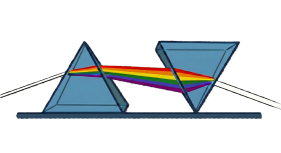
The comparison between Fred Emery’s Open Systems Theory (OST[E]) and Robert Pirsig’s Metaphysics of Quality (MOQ) reveals a tension between a highly structured, communal process of active adaptation and a more individualistic, philosophical pursuit of Quality. While Emery provides the “gears” for social change, Pirsig provides the “spark” for cognitive reorganization.
1. The Nature of the Inquiry: Funnel vs. Seed Crystal
The primary difference lies in how each approach initiates change through questioning.
• Emery’s Funnel: Emery utilizes a rigorous, “funnel-like structure” through the Search Conference[1]. It moves predictably from the “Extended Social Field” (What is the world we live in?) to the “System” (What do we keep, drop, and create?) and finally to “Action”[1],[2]. It is a collective, disciplined march toward a “Most Desirable Future”[3].
• Pirsig’s Seed Crystal: Pirsig views a powerful question not as a step in a process, but as a “seed crystal”[4]. A single question (e.g., “What is Quality?”) can cause an amorphous mass of dissatisfaction to suddenly crystallize into a structured system of thought[4]. Change for Pirsig is often a sudden, evolutionary leap in understanding rather than a phased workshop output.
2. Handling Systemic Flaws: Maladaptation vs. Mu
Both authors address the failure of existing systems but offer different “unloading” mechanisms.
• Emery’s Redundancy: In the Participative Design Workshop (PDW), Emery asks, “What is the organization currently doing to its people?”[5]. He diagnoses “maladaptive” structures (Design Principle 1) and seeks to replace them with self-managing groups (Design Principle 2) to ensure the system can survive environmental turbulence[5].
• Pirsig’s Mu**:** Pirsig employs the Japanese concept of Mu (“unasking the question”) for situations where the inquiry itself is structurally flawed[6]. He argues that a “Yes/No” trap often indicates the context of the question is too small for the truth, requiring the observer to enlarge their context rather than just finding a better “process” solution[6].
3. Epistemological Focus: Behavior vs. Value
Their underlying scientific philosophies (“ontologies”) drive different types of interventions.
• Emery’s Material Universals: Emery moves away from “Abstract Universals” (What is it?) to “Material Universals” (What does it do?)[7],[8]. He defines a system by its behavior in a specific environment, making his approach operational and strategic[8].
• Pirsig’s Metaphysics of Quality: Pirsig’s inquiry is biographical and evolutionary[9]. He views a person or organization as a “culture of one,” digging through the “stratigraphy of value” to understand what an entity likes or dislikes to reconstruct its history of values[9].
4. The Goal of Change: Structural Redesign vs. Dynamic Quality
• Process-Heavy Design: For Emery, the goal is structural integrity—ensuring an organization has the “internal capability” to handle external complexity through democratic, self-governing units[5].
• Quixotic Openness: For Pirsig, the goal is to remain open to “Dynamic Quality”[10]. He advocates for the “hanging question”—leaving a mystery unanswered rather than forcing a false solution—to allow a breakthrough to eventually emerge[11].
Summary Comparison
| Feature | Fred Emery (Process-Heavy) | Robert Pirsig (Quixotic) |
|---|---|---|
| Primary Method | Phased Workshops (SC & PDW)[12] | Philosophical Inquiry & Koans[13] |
| Starting Point | Environmental Scanning[1] | The “Seed Crystal” Question[4] |
| Logic Type | Material Universals (Behavior)[8] | Metaphysics of Quality (Value)[13] |
| View of Failure | Maladaptive Structure[2] | Category Error / Small Context (Mu)[6] |
| Desired Outcome | Active Adaptation/Redesign[12] | Breakthrough Insight/Evolution[10] |
While Emery builds a “map” for a community to navigate the future[3], Pirsig is more interested in the “compass” of Quality that guides an individual’s perception of the present[4].
References
[1] Fred Emery.md [2] Fred Emery.md [3] Fred Emery.md [4] Robert Pirsig.md [5] Fred Emery.md [6] Robert Pirsig.md [7] Fred Emery.md [8] Fred Emery.md [9] Robert Pirsig.md [10] Robert Pirsig.md [11] Robert Pirsig.md [12] Fred Emery.md [13] Robert Pirsig.md