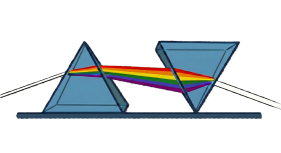
Can you visualise the flow of interest in the sequence of these prompts
The flow of interest in the sequence of these prompts reflects a recursive “Tower of Thought” that moves from defining the boundaries of the field to operationalizing action, and finally to investigating the cognitive and social “muddle” that makes systems thinking necessary.
As noted in the sources, this sequence mirrors the transition from an engineering mindset of control toward a more modest, adaptive stance that respects the evolutionary potential of the present[1].
Phase 1: Orientation and Boundary Setting
_(Prompts: Distinctions, Environment)_The sequence begins by establishing what the field is and where it stops.
• Distinctions: This initial layer focuses on the “turf war” between Systems Thinking (focusing on feedback, structure, and equilibrium) and Complexity Science (focusing on agents, self-organization, and systems far-from-equilibrium)[2][3].
• Environment: The interest then shifts from the system itself to the active constituent that makes action possible. The environment is redefined from a “passive backdrop” to a “theory-saturated” field that determines the “lay of the land” for any intervention[4][5].
Phase 2: Consolidation of Intellectual Capital
_(Prompts: Gists, Keywords + Jargon)_Once the boundaries are set, the flow moves toward building the conceptual infrastructure needed to handle the “mess.”
• Gists: This serves as a “multidisciplinary glossary,” summarizing the unique “station points” of various thinkers—from Alan Kay’s biological metaphors to Donella Meadows’ leverage points[6][7].
• Keywords: This consolidates the “Systems Esperanto”—the technical vocabulary (e.g., autopoiesis, requisite variety, entropy) required to bridge the gap between academic theory and real-world practice[8][9].
Phase 3: Operationalization and Methodology
_(Prompts: How To Guides, Nutshell/Process Diagrams)_The flow of interest moves from “What is it?” to “How do I do it?”
• How To Guides: This Recasts philosophical rambling into a structured, imperative form. It delivers the essential checklists required to run a study, emphasizing “problem finding” over “problem solving”[10][11].
• Nutshell: These prompts generate visual process maps (Mermaid diagrams) to provide a simple guide for navigating complexity. It represents the “amazing achievement” of automatically producing actionable maps from poorly structured material[12][13].
Phase 4: The Intersubjective Layer (The “Human Element”)
_(Prompts: People Dynamics, Perspectives)_Recognizing that tools alone are insufficient, the focus shifts to the observers who use them.
• People Dynamics: This phase probes how different thinkers handle “Spreadthink” and the dialectic between people[14][15]. It treats disagreement as a resource rather than an obstacle[16].
• Perspectives: This studies the consequence of second-order thinking. It acknowledges that objectivity is a social product of interacting subjective viewpoints and that “anything said is said by an observer”[17][18].
Phase 5: The Reflexive Engine
_(Prompts: Questions, What is Complexity)_The final phase loops back to the foundational mystery of the inquiry.
• Questions: This is the “serendipitous fluke” of the sequence, where the material is structured entirely around interrogatives[19]. It highlights that information is essentially the answer to a specific question, and the question determines the nature of the science performed[20].
• What is Complexity: The sequence concludes by probing the definition of complexity itself, which varies from the ontological (material factors) to the epistemic (the state of a confused mind)[21].
--------------------------------------------------------------------------------
Summary of the Flow: The Tower of Thinking Questions
The entire sequence can be visualised as climbing the “Tower of Thinking” hierarchy found in the sources[22]:
| Flow Level | Prompt Focus | Primary Question |
|---|---|---|
| Philosophy/Art | What is Complexity | Whether? (Value and existence) |
| Systems Thinking | Perspectives, Questions | Why? (Context and relationships) |
| Science | Distinctions, Environment | What? (Mechanisms and phenomena) |
| Engineering | How To, Nutshell | How? (Construction and utility) |
Does this visualisation of the “flow of interest” align with how you are currently using these QSets to navigate your project, or would you like to explore the “Italian Flag” risk model that sits at the center of many of these practical stages?[23][24]
References
[1] 💬Distinctions.md [2] 💬Distinctions.md [3] 💬Distinctions.md [4] 💬Environment.md [5] 💬Environment.md [6] 💬How To Guides.md [7] 💬Keywords + Jargon.md [8] 💬Questions.md [9] 💬Gists.md [10] 💬How To Guides.md [11] 💬How To Guides.md [12] 💬Nutshell (Process).md [13] 💬Nutshell (Process).md [14] 💬People Dynamics.md [15] 💬People Dynamics.md [16] 💬People Dynamics.md [17] 💬Perspectives.md [18] 💬Perspectives.md [19] 💬Questions.md [20] 💬Questions.md [21] 💬What is Complexity.md [22] 💬Questions.md [23] 💬Questions.md [24] 💬Questions.md