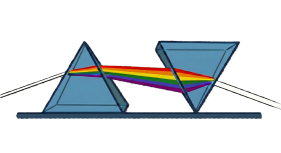
Applying Double Description—a concept pioneered by Gregory Bateson—means moving beyond a single, “flat” perspective of your project by combining two or more independent descriptions of the same situation to generate a “bonus” of insight called depth perception[1][2].
Just as binocular vision uses two different monocular views to create the extra dimension of depth, the interaction of different perspectives on your project allows a higher order of information to “jump out”[2][3].
Here is how you can apply this to view your project’s depth:
1. Identify Radically Different “Station Points”
You cannot see depth if your observers are standing in the same place. You must deliberately choose different “station points” to view the project[4].
• The TOP Framework: View the project simultaneously through Technical (data/optimization), Organizational (process/power), and Personal (intuition/leadership) lenses[5][6].
• Insiders vs. Outsiders: Contrast the “subjective” view of those embedded in the project logic with the “objective” distance of an outsider who lacks that deep context[7].
• Complementary Descriptions: Juxtapose a dynamical description (the “physics” or laws of how things happen) with a linguistic description (the “rules” or social codes that govern behavior)[8][9].
2. Generate “Pure” Descriptions (First-Order Inquiry)
The goal is not to find a compromise between views, but to let each view be “purely” itself[10].
• Avoid Early Consensus: Do not attempt to merge everyone’s view into one “average” model. Build separate models based on different worldviews (Weltanschauungen)—for example, model your project as a “financial control system” and separately as a “community-building system”[10][11].
• Use “Video Descriptions”: Strip away interpretations and get down to uninterpreted observables. Ask: “If I followed this project with a video camera, what would I specifically see?”[12][13].
3. Look for the “Pattern Which Connects” (Abduction)
Once you have multiple descriptions, you must perform Abduction—looking for recognizable similarities in patterns across different realms[14][15].
• Metaphorical Analysis: Ask, “What pattern connects the way we handle our budget to the way we handle our team conflicts?”[14][15].
• Moiré Patterns: Observe where the two descriptions “interfere” with each other. This “interference” often reveals the most complex and important structural features of the system[3].
4. Analyze the “Bonus” Insight
The most important part of Double Description is realizing that the difference between Perspective A and Perspective B is itself a higher logical type of information[16].
• Identify the Gap: If Perspective A says the project is a success and Perspective B says it’s a failure, do not ask who is right. Ask: “What does the existence of this discrepancy tell me about the project’s structure?”[16].
• Depth as Relationship: Remember that a relationship (or a project’s depth) is not internal to any one person; it is a product of the interaction between multiple views[16].
Summary Checklist for Project Depth
| Step | Action | Goal |
|---|---|---|
| Bifocal Vision | Juxtapose at least two distinct views (e.g., Expert vs. User)[17]. | Generate the “bonus” of depth[2]. |
| Abduction | Find formal similarities across different project contexts[14]. | Identify the “pattern which connects”[18]. |
| Logical Typing | Distinguish between the data and the “rules of the game”[19]. | Avoid confusing the map with the territory[19]. |
| Reframing | Step outside the current context to view the project from a new angle[20]. | Gain “80 IQ points” of leverage[21]. |
Are you finding that your project stakeholders are currently arguing over who has the “correct” view, or are you in a position where you can begin to treat these conflicting opinions as the raw material for binocular vision?
References
[1] 💬Perspectives.md [2] 💬Perspectives.md [3] 💬Perspectives.md [4] 💬Perspectives.md [5] 💬Perspectives.md [6] 💬Perspectives.md [7] 💬Perspectives.md [8] 💬Perspectives.md [9] 💬What is Complexity.md [10] 💬Perspectives.md [11] 💬People Dynamics.md [12] 💬Questions.md [13] 💬Keywords + Jargon.md [14] 💬How To Guides.md [15] 💬Keywords + Jargon.md [16] 💬Perspectives.md [17] 💬Keywords + Jargon.md [18] 💬Distinctions.md [19] 💬Questions.md [20] 💬Nutshell (Process).md [21] 💬Environment.md