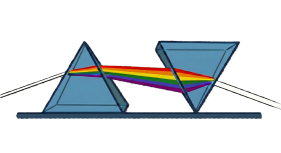
Based on the provided sources, the detection of “weak signals” or outliers is primarily interpreted as an emergent artifact of the “net”—the observer’s framing, frequency of observation, and choice of domain—rather than a matter of individual sensory capability. While humans possess innate biological mechanisms to react to stressors, our intellectual frameworks often act as “Procrustean beds” that filter out or distort these signals,.
The following points delineate the extent to which the “net” of the observer determines the visibility of outliers:
1. The Frequency of Observation (The Temporal “Net”)
The most significant “artifact” in detecting signals is the frequency with which the observer samples data.
• The Noise-to-Signal Ratio: Taleb demonstrates that the more frequently an observer looks at data (hourly vs. yearly), the more noise they perceive relative to the signal[1]. At a yearly scale, the ratio might be one-to-one; at an hourly scale, it becomes 99.5% noise and only 0.5% signal[1][2].
• Neuroticism vs. Equanimity: High-frequency monitoring transforms a person into a “neurotic” observer who reacts to every fluctuation (noise), while the low-frequency observer reacts only to real information (signal)[3][4]. Therefore, the “weak signal” often disappears when the observer chooses a station point that is too close to the data[5].
2. Theoretical Framing and Boundary Judgments
The detection of outliers is heavily influenced by the boundary judgments an observer makes regarding the domain (Mediocristan vs. Extremistan).
• Mediocristan vs. Extremistan: In Mediocristan (thin tails), outliers are inconsequential and cancel each other out[6][7]. In Extremistan (fat tails), a single outlier (a Black Swan) can dominate the entire system[7][8]. If an observer chooses a “net” designed for Mediocristan, they will mathematically fail to compute or even see the possibility of “tail events”[9][10].
• The Procrustean Bed: Modernity and “naive rationalism” seek to smooth the world’s jaggedness[11][12]. This framing often treats outliers as “errors” to be removed from the sample (e.g., in global-warming or financial models), which causes the observer to miss the very spikes that carry the most significant information[13][14].
3. Domain Dependence (The Contextual “Net”)
The observer’s ability to detect a signal is often restricted to the specific domain in which they have been trained, a phenomenon Taleb calls Domain Dependence.
• Contextual Blindness: Humans often fail to recognize the same idea when it is presented in a different context[15][16]. An expert may detect a “weak signal” in a classroom or a lab but be completely blind to it on “the street” or in a real-world socioeconomic environment[15].
• Green Lumber Fallacy: Observers often focus on “narrative knowledge” (the theory) while missing the “practical knowledge” (the signal that actually matters for survival)[17][18].
4. The Station Point: Positioning and “Skin in the Game”
The “station point” of the observer—specifically their exposure to the consequences of being wrong—determines whether a signal is noticed.
• The Turkey vs. The Butcher: An event that is a “Black Swan” (a surprise outlier) to the turkey is a predictable signal to the butcher[19]. The difference is entirely a property of their station point and historical framing[19][20].
• Skin in the Game: Observers without “skin in the game” (e.g., bureaucrats or academics) are prone to “epistemic arrogance,” mistaking the unknown for the nonexistent[21]. Conversely, those with a personal downside are forced to be more alert to “weak signals” because their survival depends on it[24].
5. Sensory Capability vs. Emotional Interference
While humans have an organic “sensory capability” to detect danger (System 1), this is often an unreliable guide in the modern world.
• Risk as Feelings: Detection and avoidance of risk are mediated more by the emotional brain than the “thinking” brain[27][28].
• The Hindsight Bias: After an outlier occurs, our brains retrospectively rewrite history to make the event appear predictable, which creates an “illusion of predictability” that blinds us to future outliers[29].
• Stochastic Resonance: Interestingly, the sources suggest that some “noise” is actually necessary for detection; the presence of background interference can actually make weak SOS signals audible through the physical property of stochastic resonance[32].
Summary
The detection of outliers is less about an individual’s internal “talent” and more about the epistemological net they cast. If the net is too fine (high-frequency observation), it catches too much noise; if the net is too rigid (theoretical models), it allows the most important outliers to slip through the “tails”[1]. True detection requires a “via negativa” approach—removing the filters of over-optimization and narrative bias to let the simple and natural signals take their course[35].
References
[1] [Book] Taleb - Antifragile.pdf [2] [Book] Taleb - Fooled by randomness.pdf [3] [Book] Taleb - Antifragile.pdf [4] [Book] Taleb - Fooled by randomness.pdf [5] [Book] Taleb - Antifragile.pdf [6] [Book] Taleb - Antifragile.pdf [7] taleb - pp2.pdf [8] [Book] Taleb - Antifragile.pdf [9] [Book] Taleb - Antifragile.pdf [10] taleb - pp2.pdf [11] [Book] Taleb - Antifragile.pdf [12] [Book] Taleb - Antifragile.pdf [13] [Book] Taleb - Fooled by randomness.pdf [14] [Book] Taleb - Fooled by randomness.pdf [15] [Book] Taleb - Antifragile.pdf [16] [Book] Taleb - Antifragile.pdf [17] [Book] Taleb - Antifragile.pdf [18] [Book] Taleb - Antifragile.pdf [19] [Book] Taleb - Antifragile.pdf [20] [Book] Taleb - Antifragile.pdf [21] [Book] Taleb - Antifragile.pdf [24] [Book] Taleb - Antifragile.pdf [27] [Book] Taleb - Fooled by randomness.pdf [28] [Book] Taleb - Fooled by randomness.pdf [29] [Book] Taleb - Antifragile.pdf [32] [Book] Taleb - Antifragile.pdf [35] [Book] Taleb - Antifragile.pdf