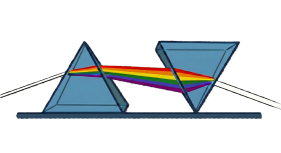
The STPrism approach in a Nutshell:-
- Select your sources: key authors in any format (which can include proprietary information or even internal discussion forums).
- Build separate NotebookLM notebooks for each author/source containing all their works (and old books!).
- Use prompts to produce suitable digests for every author, standard foundational questions which expose key aspects of their thinking - the QSets
- Mash these QSets together into one combined NotebookLM notebook which is your ‘spectroscopy’ resource (in try it! this is called QSet-SampleData)
- Use Gemini to inspect any other piece or pieces - the target piece - with the perspectives contained in the combined NotebookLM with prompts such as:- a. How does QSet-SampleData support the thinking in target piece
An Illustrated example
(I include this illustrated example just to show how simple this is to use. This is the practitioner/consumer access point, the advantages of the underlying architecture are introduced with some business ideas on how it can be used profitably at ££ The Business Opportunity).
-
To get to step 4 - click on a sample QSet https://notebooklm.google.com/notebook/1cf8c48b-8e3c-4953-94c9-09bfae010941 (or develop your own QSet). It will look like this ..
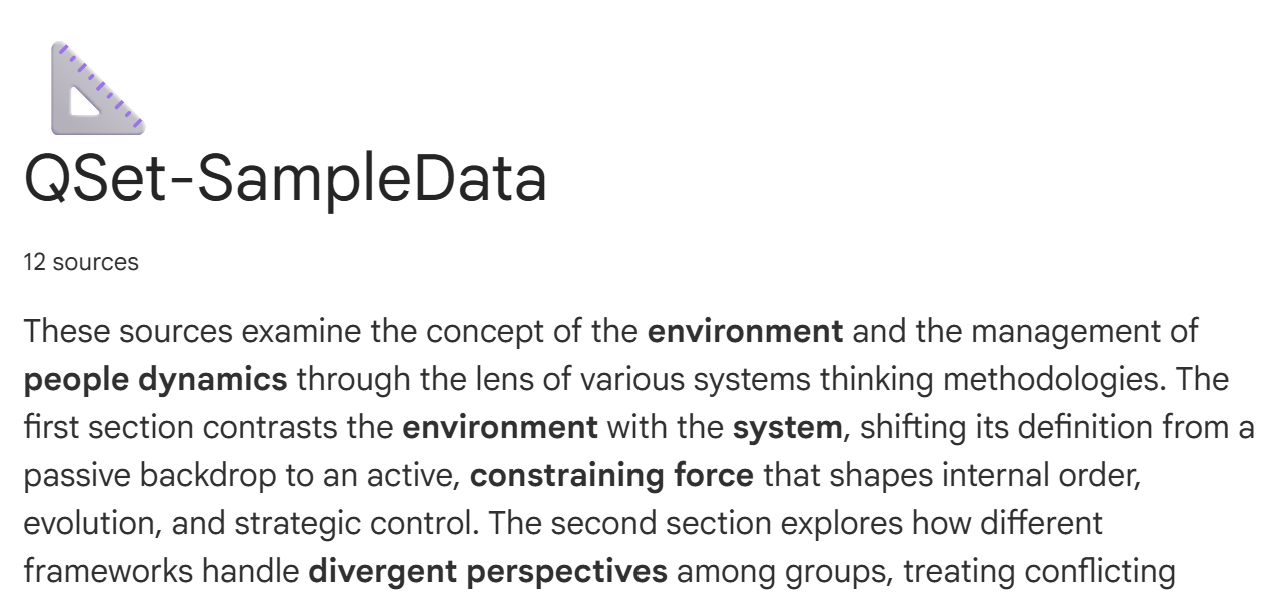
-
From step 4 … referencing the QSet sample data in Gemini
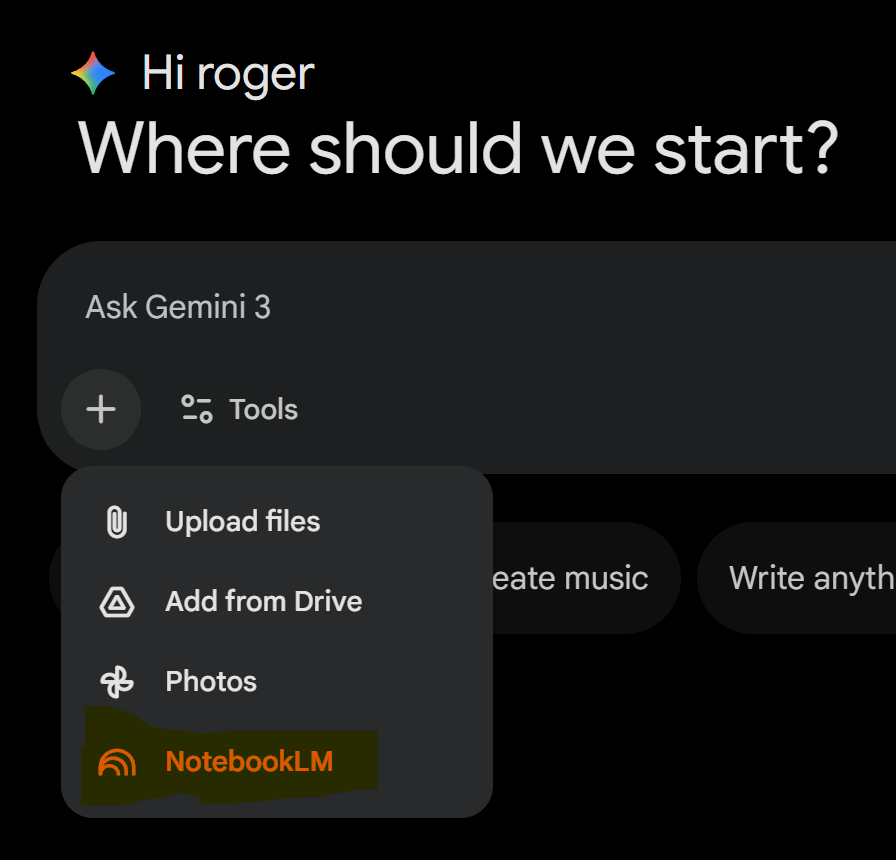
- And load the specific NotebookLM (if you are feeling particularly narcissistic you could include your own work, or just a single book)
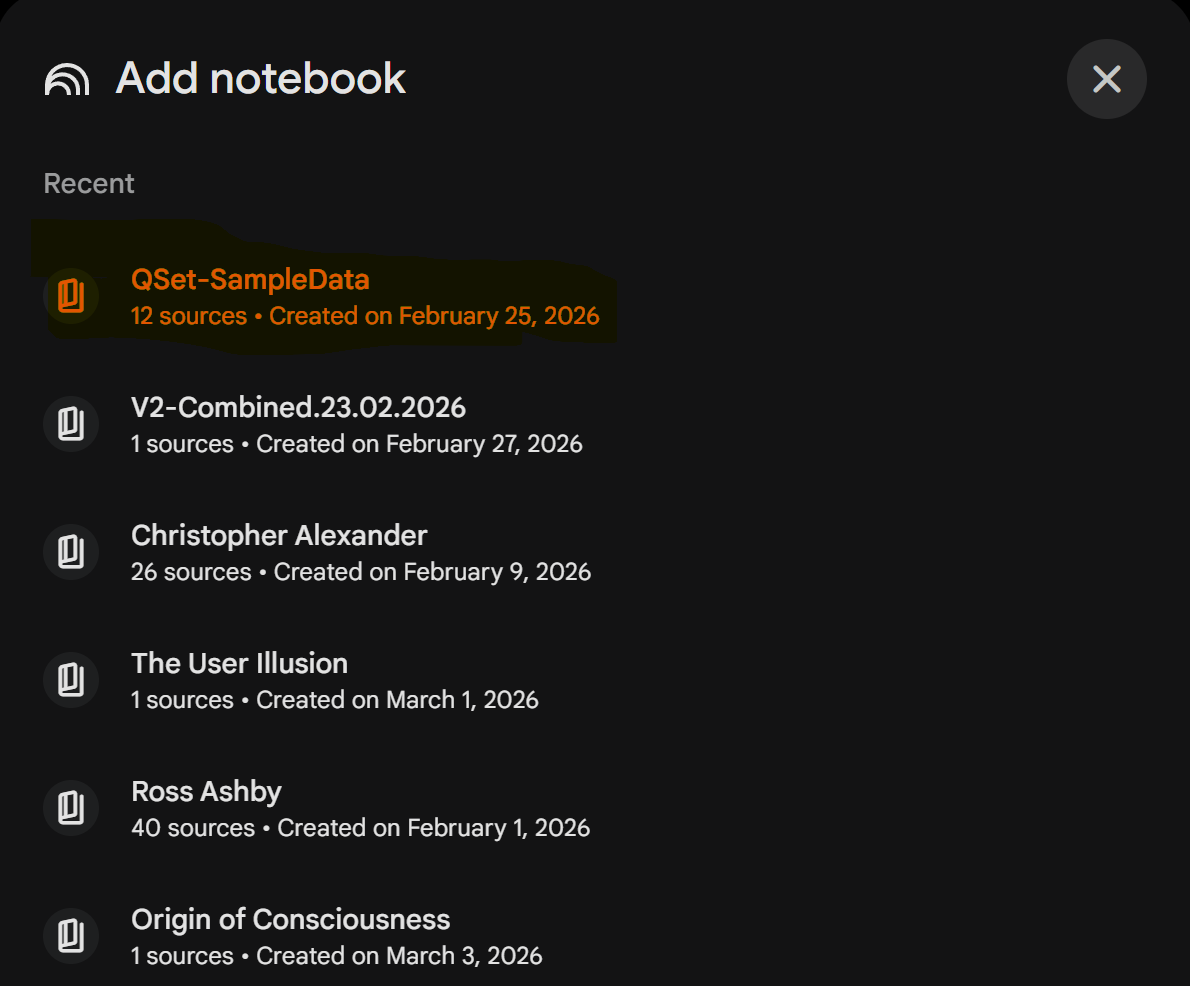
- Then load the target document(s) this could be anything, no preparation is required and it ‘makes sense’ of diagrams as well as text
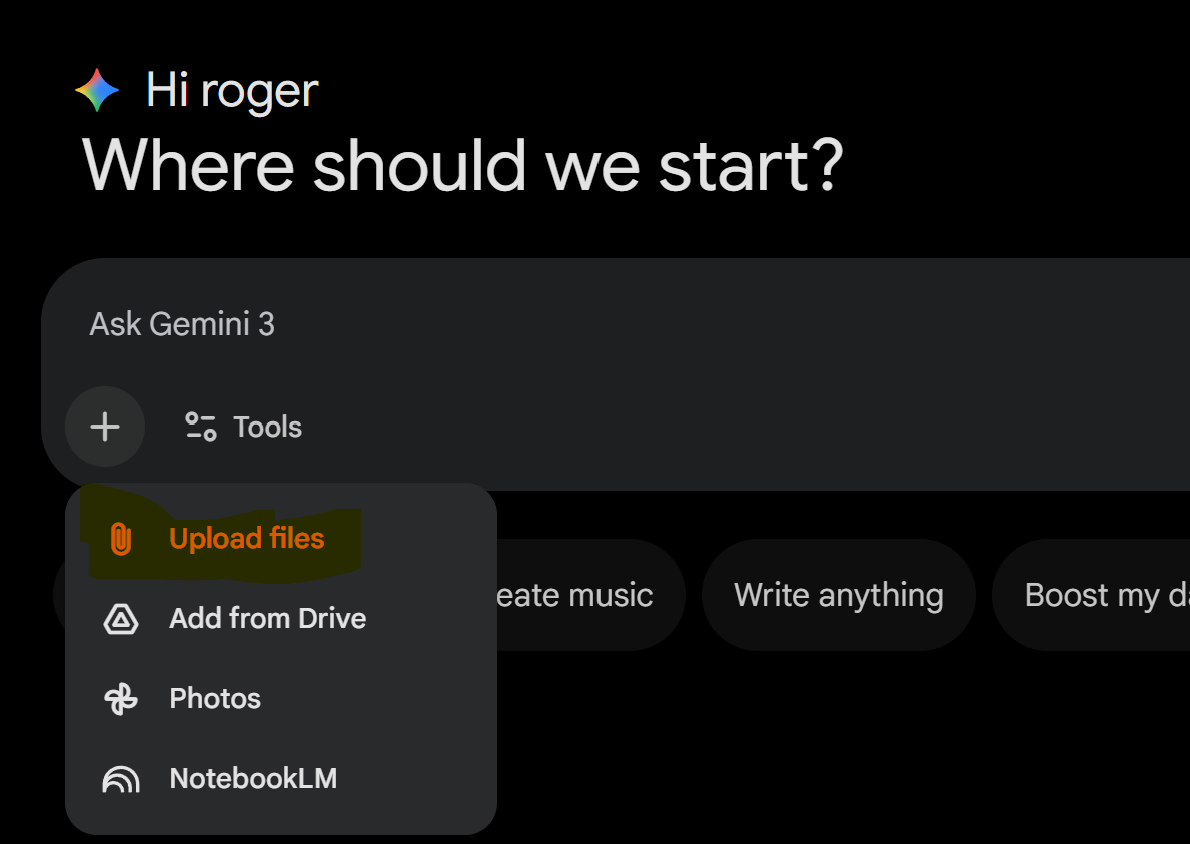
- Then just run the system with suitable prompts which will look like this …
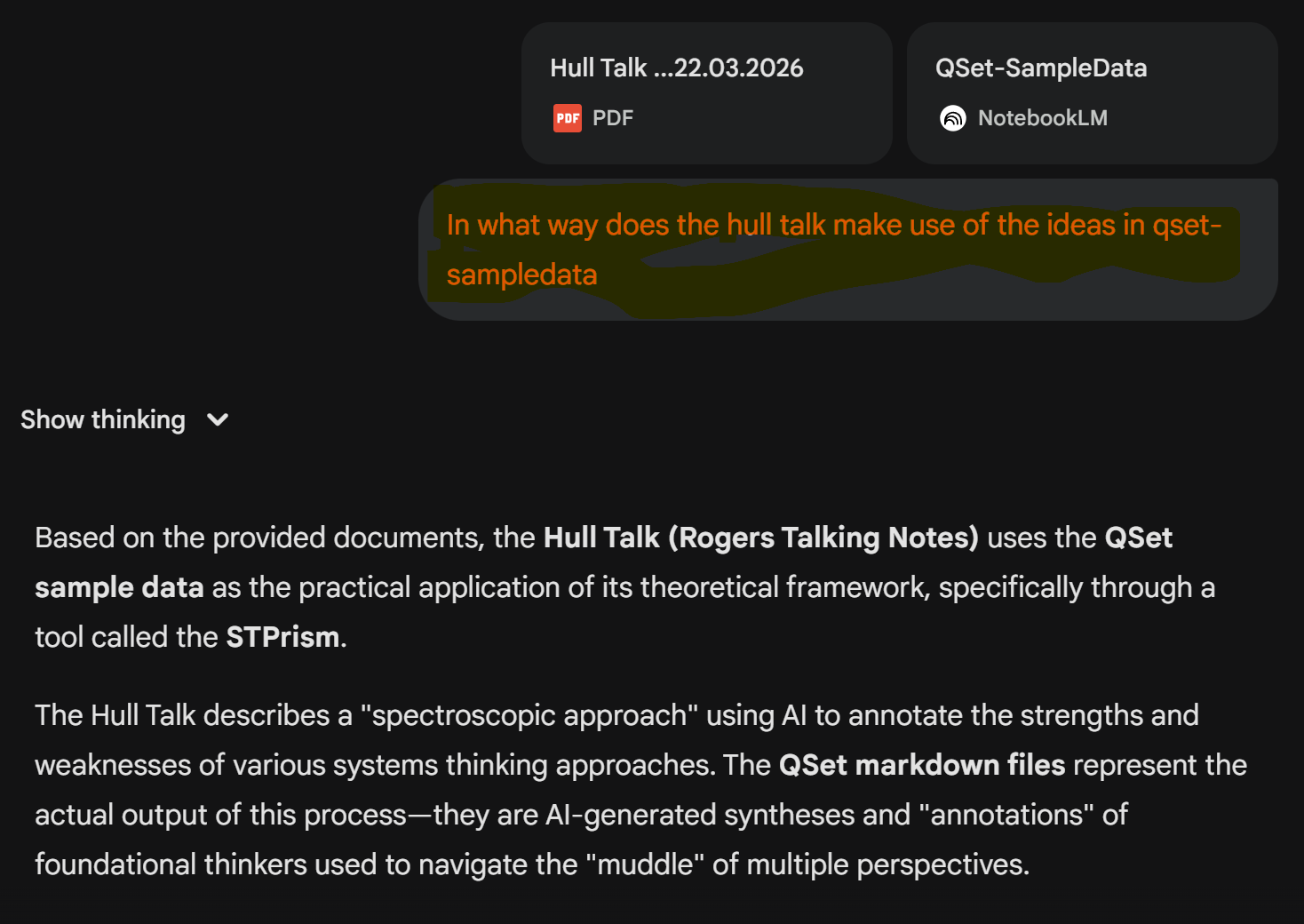
To learn more Try It! yourself or follow the sample Sample Answers including a conference guide