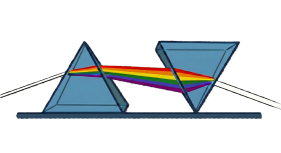
Based on the provided sources, particularly the work of Howard Pattee, Robert Rosen, and T.F.H. Allen, we must use complementary modes of description because complex systems (especially living and social ones) possess a dual nature that cannot be captured by a single, logically consistent formal model.
The problem this addresses is the incompressibility of complexity: a single model either focuses on the physical laws (dynamics) and loses the meaning, or focuses on the symbolic rules (function) and loses the mechanism.
Here is a detailed breakdown of why complementarity is necessary and the specific problems it solves:
1. The Problem of the “Epistemic Cut” (Laws vs. Rules)
The fundamental problem, identified by Howard Pattee, is that reality is divided by an “Epistemic Cut” between the knower (subject/symbol) and the known (object/matter). These two domains obey fundamentally different and incompatible logic:
• Mode 1: Dynamic Laws (Rate-Dependent): This describes the physical hardware (e.g., proteins, planets, billiard balls). These processes are continuous, inexorable, and depend critically on time and rate (e.g., how fast a reaction happens determines the result).
• Mode 2: Symbolic Rules (Rate-Independent): This describes the informational software (e.g., DNA, language, computer code). These structures are discrete, arbitrary (they can be changed), and are rate-independent (the meaning of a genetic code or a traffic sign does not change depending on how fast you read it).
The Solution: We must use complementary descriptions because you cannot derive a rule from a law. Physical laws describe what must happen; symbolic rules describe what ought to happen to achieve a function. To understand life, you need both: the laws to explain the energy, and the rules to explain the control[1],[2],[3].
2. The Problem of “The Largest Model” (Simulability)
Robert Rosen defines a “simple” system (or mechanism) as one that can be fully described by a single “largest model” from which all other details can be derived (reductionism).
• The Complexity Problem: Rosen argues that living systems are complex, meaning they have no largest model. No single mathematical formalism can capture all their interactions. If you view an organism as a set of atoms (physics), you lose its biological function. If you view it as a functional block (biology), you lose its detailed causal dynamics.
• The Solution: Complementarity allows us to use multiple, irreducible descriptions that are formally incompatible but jointly necessary. We accept that the system has distinct “causal categories” (Material, Efficient, Formal, Final) that cannot be merged into one equation[4],[5],[6].
3. The Problem of Logical Contradiction
T.F.H. Allen notes that in complex systems, a single formal model often hits a logical wall because the system exhibits contradictory properties depending on the observer’s scale or question.
• The Paradox: For example, in physics, light behaves as a wave in one context and a particle in another. In social systems, a person might be a “terrorist” in one narrative and a “freedom fighter” in another. A single formal model cannot hold these contradictions without breaking (becoming “degenerate”).
• The Solution: Complementarity allows observers to hold these contradictory models in tension without forcing a false resolution. Allen suggests that narrative is the high-level device used to bridge these complementary, incompatible models[7],[8].
4. The Problem of Measurement and Control
You cannot measure or control a system if you are fully merged with it.
• The Requirement: To measure a system, you must establish a cut between the measuring device (which is “outside” or distinct) and the dynamics being measured.
• The Solution: Complementary modes allow us to describe the system as “open” (interacting with an environment) while simultaneously modeling it as “closed” (to make logical predictions). We acknowledge that our “closed” model is a useful fiction (an encoding) that will eventually fail (bifurcate) when the “open” reality deviates from it. This failure is not a mistake; it is the signature of complexity[3],[9],[10].
Summary Table
| Problem | The Complementary Solution |
|---|---|
| Logic: Dynamics (Time) vs. Symbols (No-Time) are incompatible. | Use distinct descriptions for Laws (Physics) and Rules (Control)[2]. |
| Ontology: Complex systems have no single “blueprint.” | Use multiple irreducible models that cannot be merged[6]. |
| Measurement: Observer cannot be the Observed. | Establish an Epistemic Cut to distinguish the measurer from the system[9]. |
| Explanation: Paradoxes arise (Wave/Particle). | Use Narrative to bridge incompatible formal models[8]. |
In short, we use complementary modes because complex systems exist at the intersection of matter and meaning. Since matter (laws) and meaning (rules) follow different logical structures, we need a “stereoscopic” approach—using two different views to perceive the depth of the whole[11],[12].
References
[1] 💬Gists.md [2] 💬Gists.md [3] 💬Perspectives.md [4] 💬Distinctions.md [5] 💬Distinctions.md [6] 💬Perspectives.md [7] 💬Perspectives.md [8] 💬Perspectives.md [9] 💬Questions.md [10] 💬Questions.md [11] 💬Perspectives.md [12] 💬Perspectives.md