Yes, James Wilk adds a distinct and disruptive perspective to this debate. While most authors argue about the differences between systems thinking and complexity science, Wilk argues that both fields share the same fundamental flaw and rejects them both in favor of a “new epistemology” based on cybernetics and biosemiotics[1][2].
Here is how James Wilk reshapes the debate:
1. He Lumps Systems Thinking and Complexity Together
Unlike authors such as Dave Snowden or Tim Allen, who see a sharp divide between the two fields, Wilk groups them together. He argues that despite their internal squabbles, both traditions share a “rationalist” worldview that attempts to model reality[1][3].
• The Critique of Systems Thinking: He characterizes it as relying on “fancy charts with loops and boxes and arrows” to represent the territory[3].
• The Critique of Complexity Science: He dismisses fashionable attempts to apply complexity theory to management as “dangerously Newtonian,” noting that they merely replace static models with computer simulations derived from physics[4].
2. The Trap of Modeling vs. The Power of Filtering
Wilk’s central contribution is the shift from modeling complexity to filtering it.
• The Problem: Both systems thinking and complexity science attempt to construct a map (a model) of the complexity “out there.” Wilk argues this is a “rationalist dream” of a universe structured by “objects and relationships”[3][5].
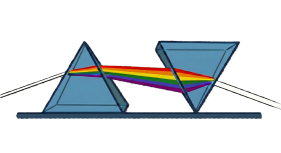
• The Solution: Instead of trying to represent the complexity (which is impossible to do fully), Wilk’s approach (Minimalist Intervention) focuses on filtering. He argues that effective intervention does not require a model of the whole system, but rather a mechanism to filter the “flux” of reality[2][4].
3. “Flux and Constraint” vs. “Cause and Effect”
Wilk proposes an ontological shift.
• Traditional View: Systems thinking and complexity science often rely on concepts of causality, whether linear (A causes B), circular (feedback loops), or non-linear (butterfly effect)[2].
• Wilk’s View: He replaces these causal concepts with “flux-and-constraint”[2]. In his view, reality is a constant flux, and “systems” are merely the result of constraints that filter this flux.
4. Second-Order Cybernetics (The “Us” vs. “It”)
Drawing on the “Other Group” (TOG) source, Wilk’s approach is identified as moving from a First-Order view (looking at the system as an “it”) to a Second-Order view (looking at “us” and our interaction)[6].
• While traditional systems thinking focuses on the “parts” or “boundaries,” Wilk focuses on the interaction.
• He explicitly states that his theory of change owes nothing to complexity theory or Chaos Theory, but derives instead from “cybernetics and biosemiotics”[2].
SummaryJames Wilk adds to the debate by rejecting the premise that we need better models of complex systems. He argues that both systems thinking and complexity science are trapped in a “representational” paradigm. His alternative is not to study the system more deeply (complexity science) or map it more holistically (systems thinking), but to intervene minimally by managing constraints and filters[2][4].
References
[1] James Wilk.md [2] James Wilk.md [3] James Wilk.md [4] James Wilk.md [5] James Wilk.md [6] TOG.md