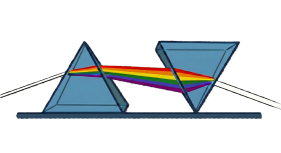
How do hierarchical structure simultaneously limit options but increase specialisation how is this related to speciation and the ideas of Waddington and why does this make the laws of physics universal but seemingly irrelevant or even appear to be transcended?
Based on the provided texts, the author, Roger James, fundamentally anchors his entire framework for Systems Thinking and Complexity in Warren Weaver’s 1948 paper “Science and Complexity.”
The author uses Weaver’s ideas not just as historical context, but as the primary “map” for locating where Systems Thinking applies and how to intervene in complex problems. Here is how the material links to Weaver’s concepts:
1. The Partition of Three Zones
The author adopts Weaver’s classification of scientific problems into three distinct zones, often using Gerald Weinberg’s terminology of “Middle Numbers” to describe the central category[1].
• Zone 1: Organized Simplicity (Machines)
◦ Weaver’s Definition: Problems with very few variables (e.g., a billiard ball, a pendulum)[4]. ◦ Link to Text: The author describes this as the domain of Deterministic Control and Prescription. Here, we can know exactly what will happen using classical mechanics and calculus. Stability is achieved through “stasis” or rigid specification[5][6]. • Zone 3: Disorganized Complexity (Aggregates)
◦ Weaver’s Definition: Problems with billions of variables (e.g., gas molecules, a mob). The individual variables are unknown or erratic, but the system is predictable in the aggregate[4][7]. ◦ Link to Text: The author describes this as the domain of Probabilistic Control and Description. Here, we use statistics and averages (e.g., “the average family has 2.4 children”). Stability is dynamic but “self-canceling”[5][6]. • Zone 2: Organized Complexity (The “Goldilocks” Zone)
◦ Weaver’s Definition: The “Middle Region” where variables are too numerous for exact formulas but too interrelated to be treated statistically[7][8]. ◦ Link to Text: The author calls this the “Goldilocks Zone.” This is the specific domain of Systems Thinking[9][10]. It is where biological, social, and management problems exist.
2. The “Middle Numbers” Problem
The material links Weaver’s concept to Gerald Weinberg’s “Law of Medium Numbers”.
• Standard science fails here because there are “too many parts for deterministic analysis” but “not enough for probabilistic analysis”[2][8].
• The author argues that Systems Thinking provides the necessary “new epistemology” to deal with this region, moving away from “one-way causality” (Zone 1) and “averages” (Zone 3) toward relationships, structure, and patterns[11][12].
3. Intervention Strategies (The “Unstick” and “Channel”)
The author extends Weaver’s descriptive model into a prescriptive guide for action. He argues that effective intervention involves moving a problem into the “Goldilocks Zone” of Organized Complexity where leverage is possible[6][13].
• From Simplicity to Complexity (L to R): You can “unstick” a rigid, static system (Zone 1) by introducing energy, agitation, or new variables to make it dynamic and adaptive. This moves it toward Organized Complexity[6][14].
• From Disorganized to Organized (R to L): You can “channel” or “crystallize” a chaotic system (Zone 3) by introducing constraints or “breaking symmetry.”
◦ Example: An aerofoil converts the random motion of air molecules (Disorganized Complexity) into a directional force of lift (Organized Complexity)[6][15]. ◦ Example: A laser aligns random atomic emissions into a coherent beam[16].
4. Architecture as the Mechanism of Organized Complexity
The author links Weaver’s idea to Alan Kay’s concept of Architecture.
• In Weaver’s “Organized Complexity,” the behavior of the system is determined by the relationships between the parts, not just the parts themselves.
• The author uses the “Stone Bridge” metaphor to illustrate this. A pile of stones is Disorganized Complexity (a heap). A stone bridge is Organized Complexity. The bridge exhibits emergent properties (defying gravity) that are defined by the specific “middle number” arrangement of the stones[17][18].
Summary
The author views Weaver’s “Organized Complexity” as the fundamental definition of the problem space for Systems Thinking. It is the zone where:
1. Structure dominates material (Architecture).
2. Relationships dominate entities (Verbs over Nouns).
3. Control is achieved by managing constraints (Negative Explanation) rather than micromanaging variables[19].
References
[1] Perlite.pdf [2] Perlite.pdf [4] Recent.pdf [5] Recent.pdf [6] Recent.pdf [7] Perlite.pdf [8] Perlite.pdf [9] Perlite.pdf [10] Recent.pdf [11] Recent.pdf [12] Recent.pdf [13] Recent.pdf [14] Recent.pdf [15] Recent.pdf [16] Recent.pdf [17] Recent.pdf [18] Recent.pdf [19] Perlite.pdf