Talk
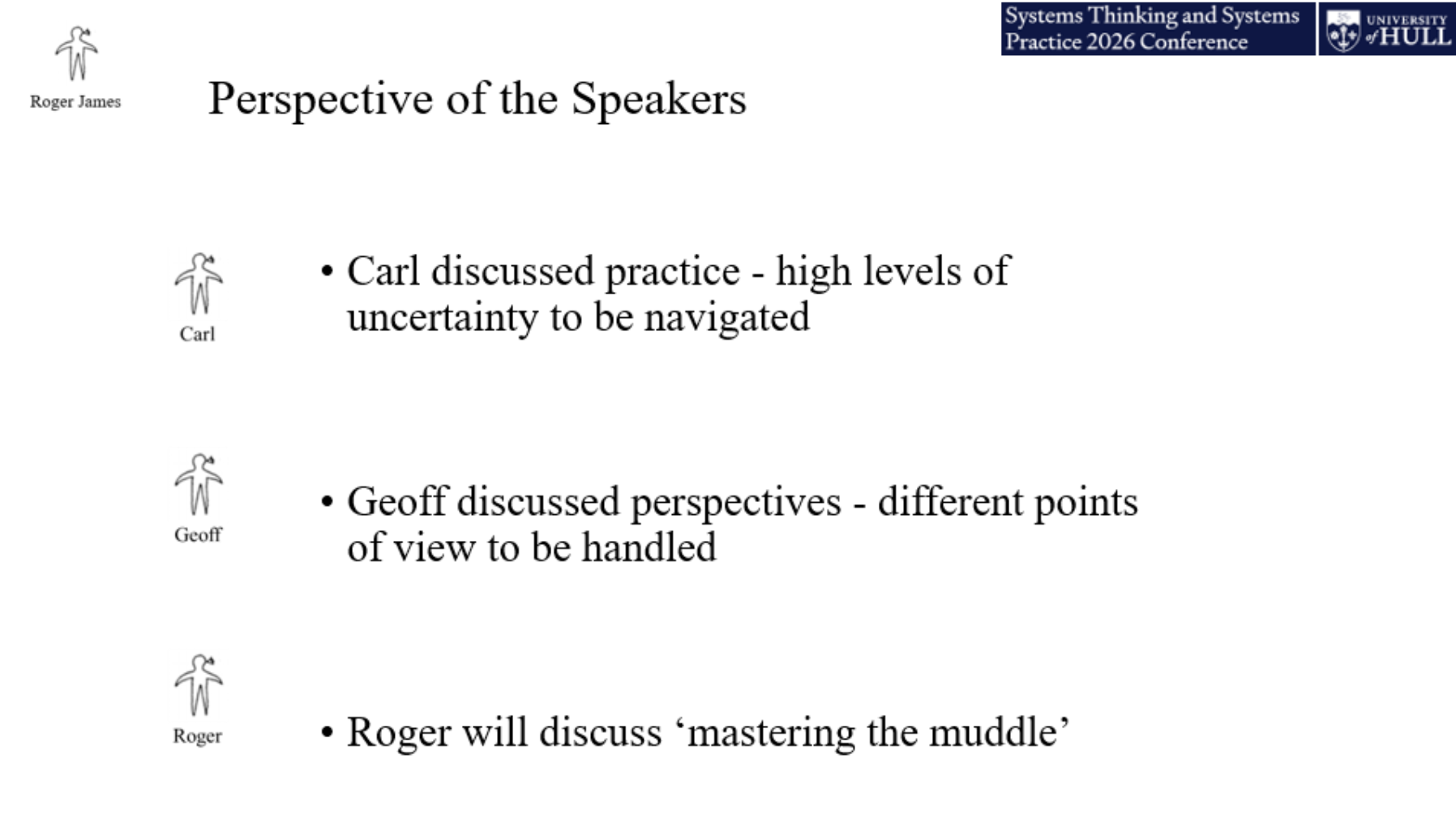
Our paper comes from a 9 month discussion in which I might have hoped we could understand the value of experience and why we are privately so critical of some aspects. Our CVs catalogues our experience but the important element is how we think, Carl for example cut through the twaddle of philosophy on complexity to Ladyman’s 4 conditions (numerosity/interactions, diversity/disorder, feedback, non-equilibrium) - to describe what you need to DO.
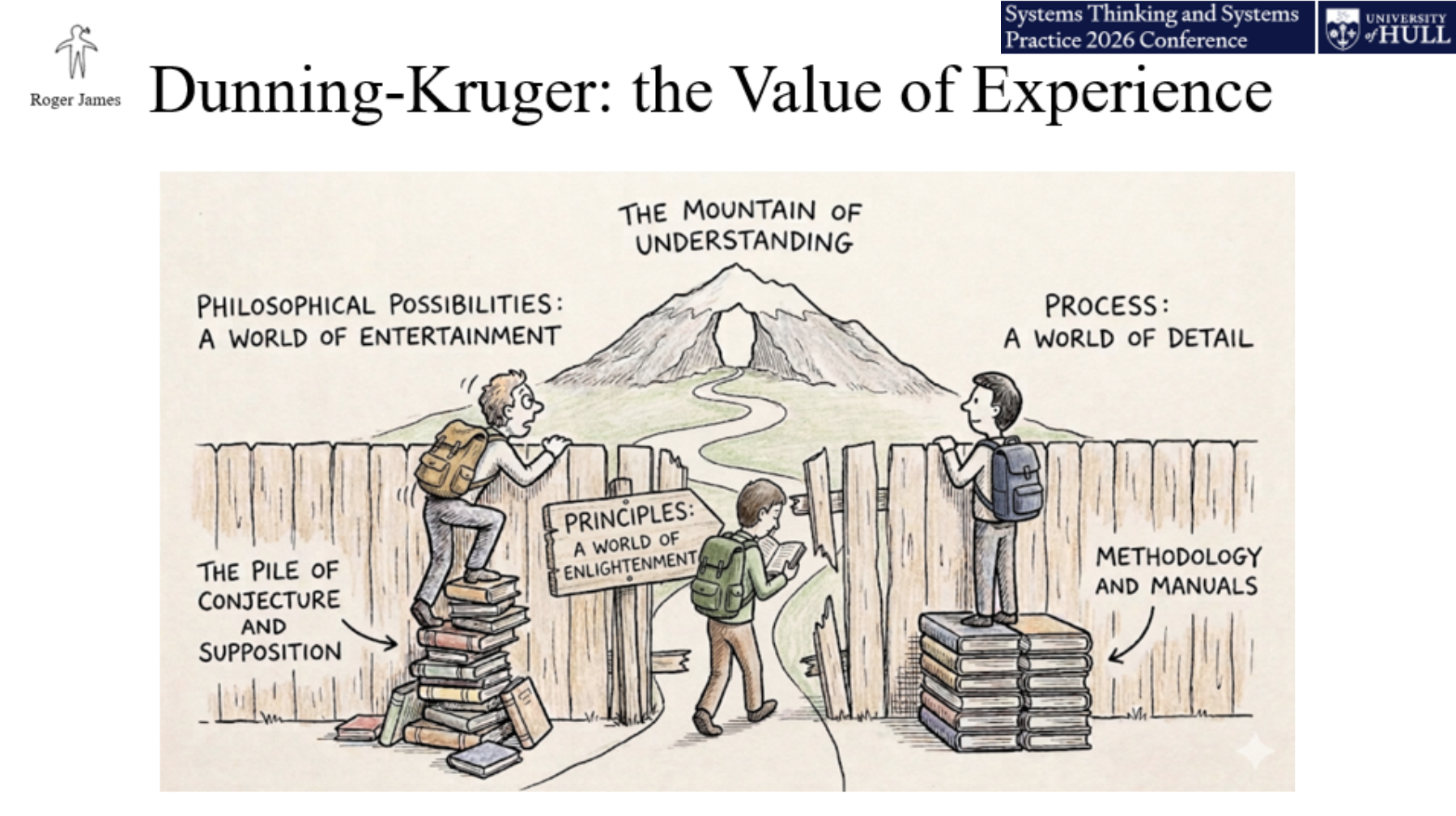
I started with twaddle a perhaps unnecessarily dismissive of the work but in the field of ST/Complexity is too much repetition duplication and fluff. The only way I can make sense is by recognising the principles. Principles which support the end objective of intervention! Oddly too much of ST/Complexity distracts our thinking onto itself (narcissistic) - with too much philosophical discourses or methodological detail - rather than focusing on the end goal.
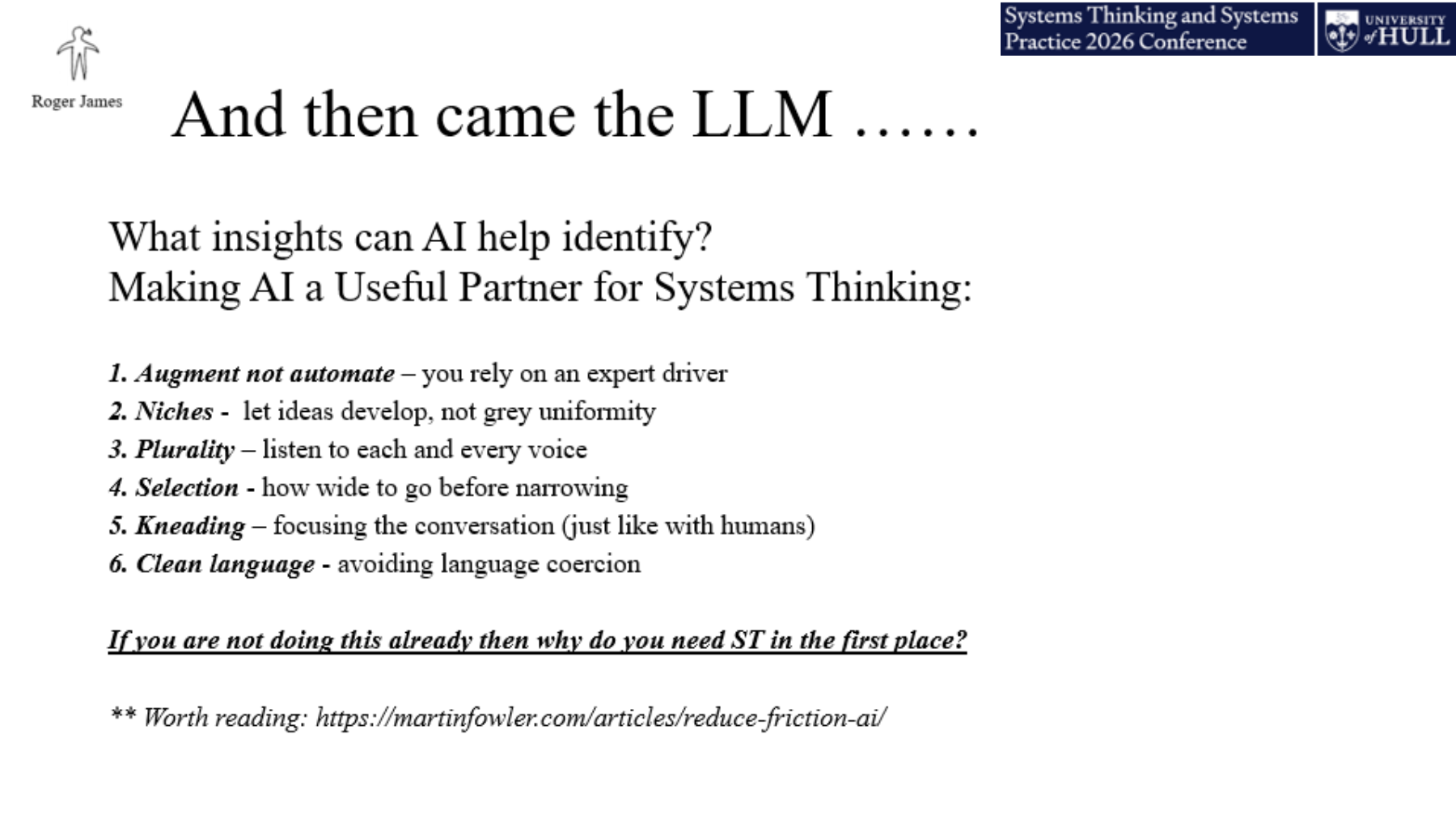 LLMs employ a conversational paradigm for it’s User Illusion, so let’s ask what an ideal conversation with a community of Systems Thinker Complexity Scientists would look like.
There is a buzz about AI (indeed AI is just embarking in the same challenges of reconciling the ontological with the epistemic ground already covered in ST/Complexity) and AI is the supreme logician. so by accident our 9 month discussion fell into AI - following the path laid down by Koestler - Bisociation - first as humour then as scientific utility then as art ( haha, ahah aah) and in retrospect by design. So let’s pretend we knew what we were doing and start at the end.
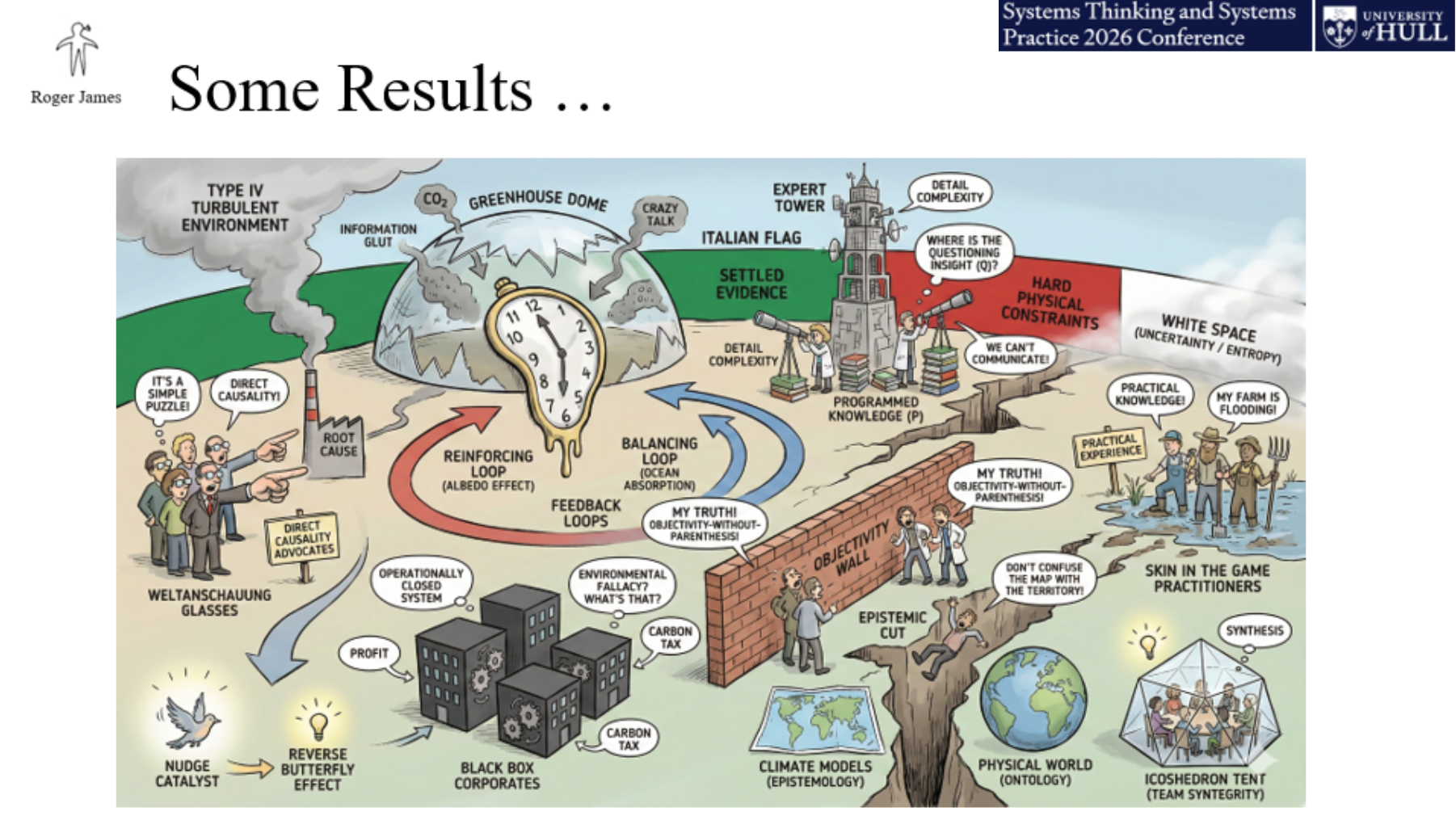
The art - a rich picture - all you need to know at this stage is that it was produced from a guardian article (from Greta) assessed by my digital team of Complexity and Systems Thinkers - a resource of carefully curated collection of their main works and old books.
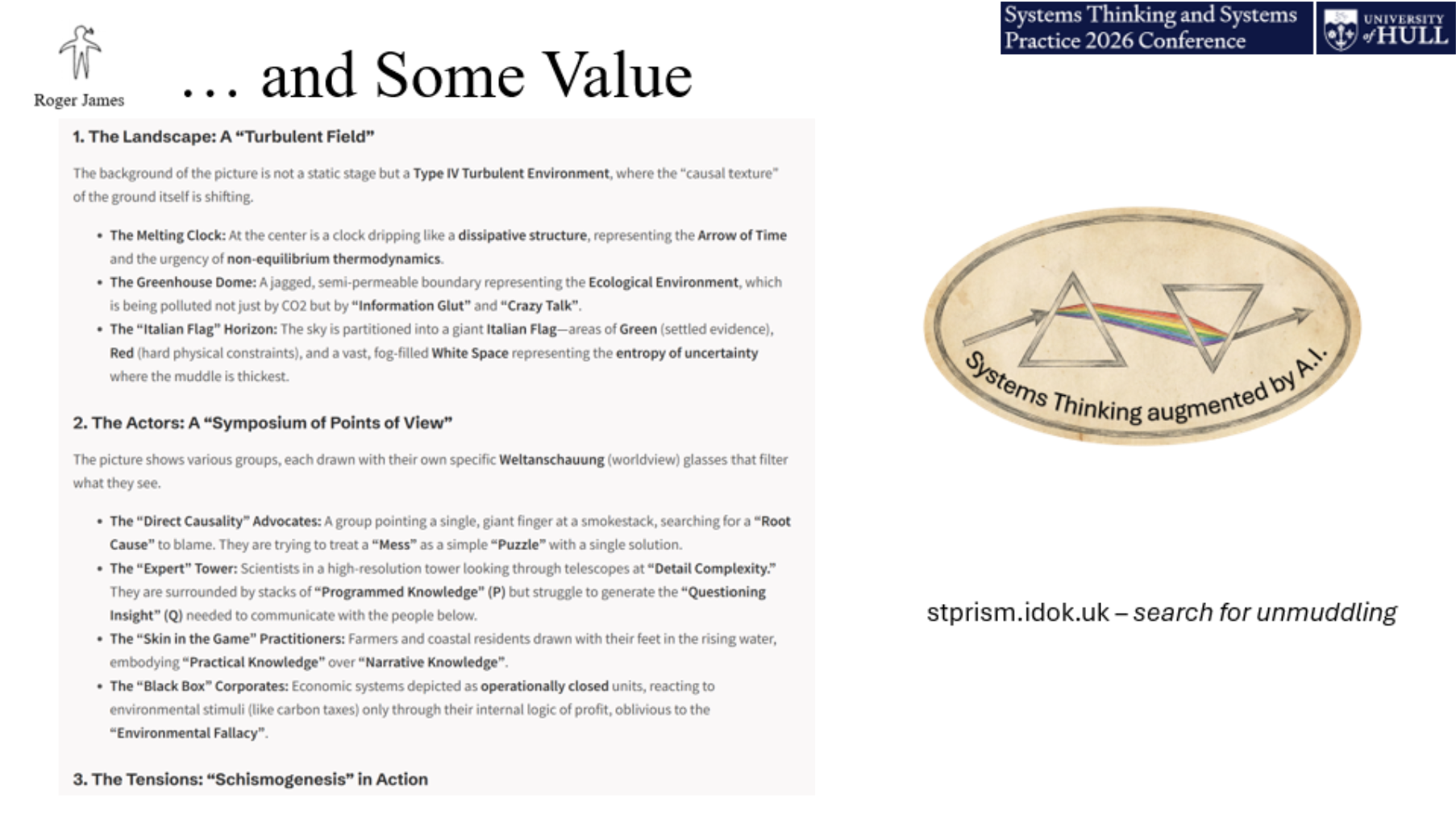
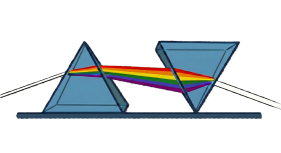
The science - the critique - brings a form of Systems Thinking spectroscopy to the task. It reflects on aspects of the situation - just like any good Systems Thinker would do. But it does this non-destructively the essence remains without the problem being forced into some mangle of thought (e.g. systems dynamics)
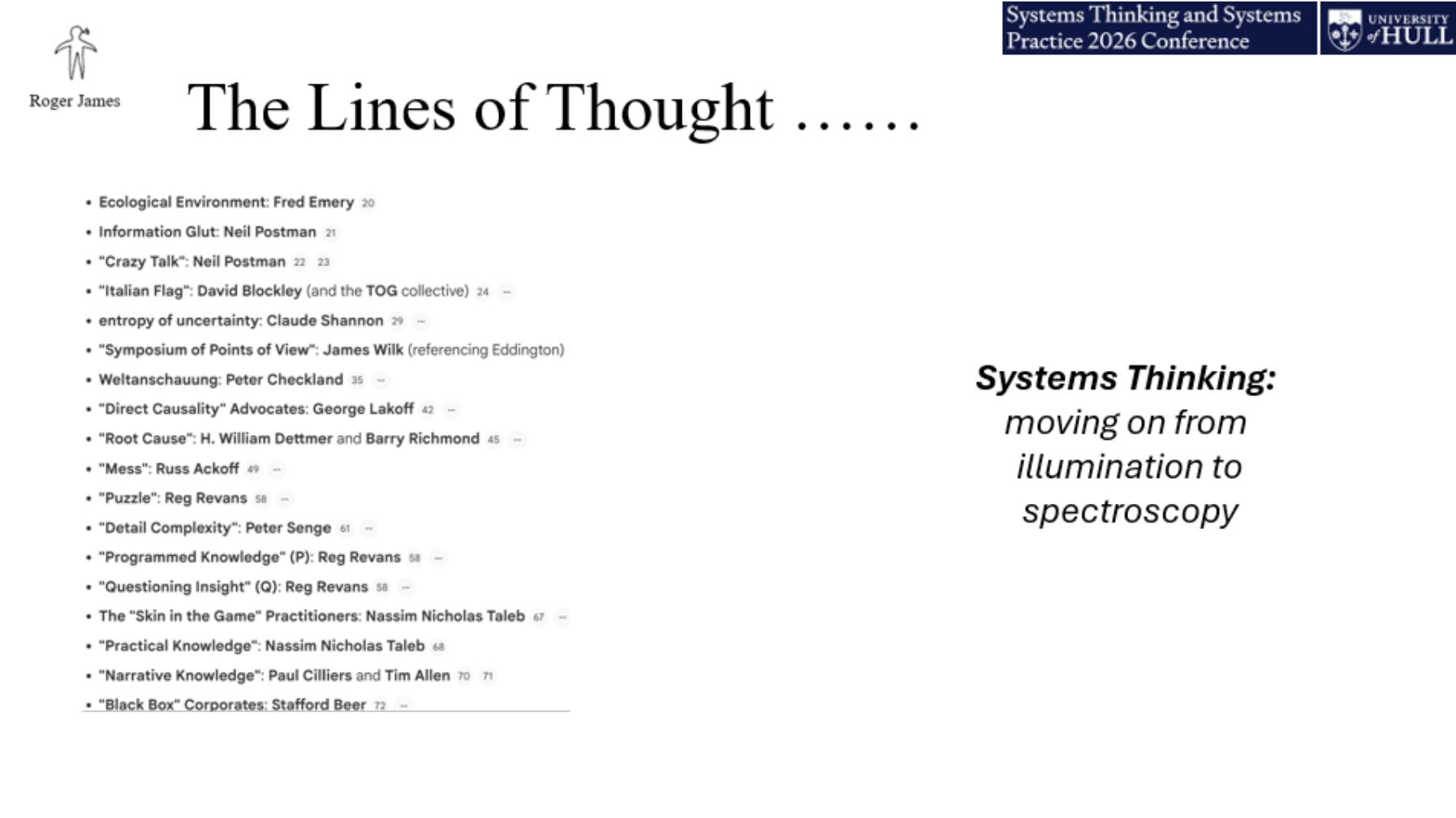 Spectroscopy is non-destructive - you wouldn’t start analysing the authenticity of the Mona Lisa by scraping off the paint, so it is with problematic situations deeply embedded in their context we need our approach to respect this. Not magic - but a considered set of options for action.
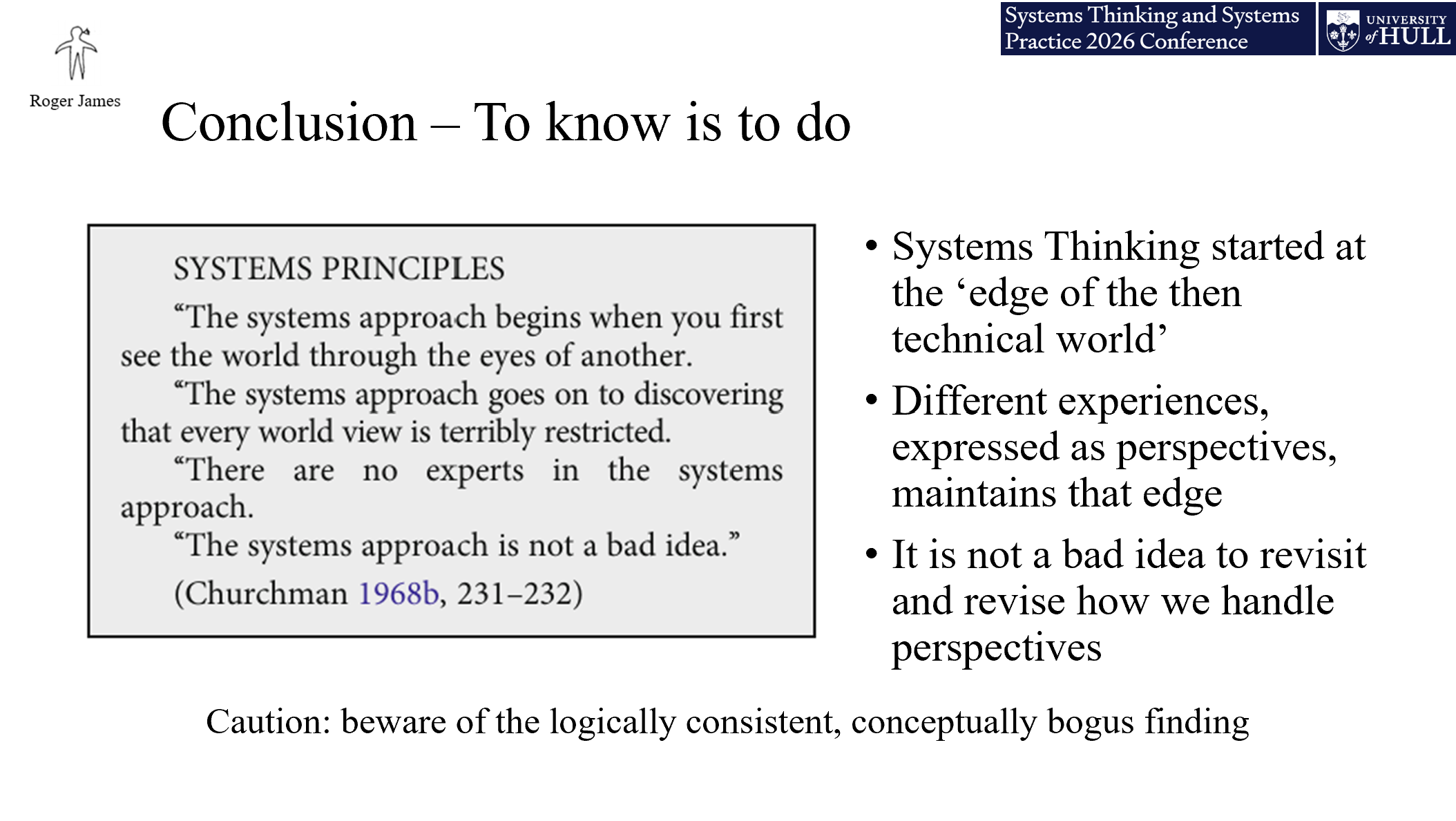 Conclusion - I started with ‘mastering the muddle’ when you first allow multiple perspectives you need to have a solution to the ‘booming buzzing confusion’ that can result. Our stance is practical and pragmatic grounded in addressing problems - ‘To know is to do’ is a restatement of Vickers’ instrumental judgment. I am only interested in getting to know because I want to do!
Experience tells you ‘what not to do’ as you traverse the learning curve from novice to expert, the STPrism harnesses AI as a practical tool for practical action. This spectroscopic approach with AI annotates the strengths and weaknesses of different approaches as annotations around the specifics of the circumstances. The context of the situation retains its primacy.
I could wax lyrical about the underlying theory such as consciousness as a philosophical entertainment or expand on the detail such as semantic normalisation as a pedantic diversion. but I suggest you try the power yourself in a real world challenge of your own. It will change your approach and possibly the very nature of the discipline. Just go to stprism.idok.me