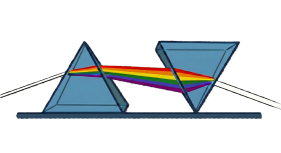
This section explores the ‘R to L transition,’ a framework that legitimizes approaches such as James Wilks’ concept of Minimal Intervention within the context of Systems and Complexity Thinking. Historically, Systems Thinking evolved from mechanical, cause-and-effect models aimed at resolving ‘stuck’ processes through incremental changes in discrete environments. Complexity Thinking followed this trajectory, focusing on how simple rules generate intricate patterns, such as fractals and emergence.
While Statistical Mechanics has successfully explained aggregate behaviour emerging from individual chaos—such as Boyle’s Law—traditional approaches have often viewed chaotic dynamics as a nuisance to be suppressed. However, as Warren Weaver argued in Science and Complexity, the most significant behaviors exist in the ‘organized complexity’ between clockwork simplicity and statistical randomness. Technologies like the aerofoil and the laser exemplify the R to L transition: a shift from raw chaos to managed behaviour achieved by fundamentally altering the symmetry of the system.