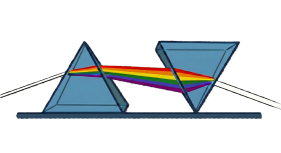
Based on the sources, the collection demonstrates a clear intellectual lineage where authors define the territory (Weaver), establish the mechanical laws (Ashby), and rigorously synthesize the metaphysics (Ladyman), all of which are finally operationalized by the “Process Map.”
Here is an analysis of how these authors embrace and extend one another’s work:
1. The Process Map Embraces Weaver’s “Definitions” and Extends them into “Diagnostics”
The summary file (“Philip Ladyman and Ross Ashby”) explicitly embraces Warren Weaver’s historical definitions but transforms them from a descriptive classification into an active diagnostic tool.
• Embracing the Definition: The Process Map adopts Weaver’s concept of the “Middle Region”[1]. It uses Weaver’s specific criteria—a “middle number” of variables that are “interrelated into an organic whole”—to define the domain of Organized Complexity[2].
• Extending to Diagnosis: The Process Map extends this by turning Weaver’s definition into Phase 1: Diagnosis. It instructs the practitioner to “Assess the Variables” to see if they fit Weaver’s criteria[2]. It takes Weaver’s distinction between “disorganized” and “organized” complexity and uses it as a triage mechanism to decide whether to apply statistical methods or systemic design[2][3].
2. The Process Map Embraces Ashby’s “Variety” and Extends it to “Management”
The Process Map embraces Ross Ashby’s cybernetic laws but extends their application from biological and mechanical systems to organizational leadership and design.
• Embracing the Law: The Process Map cites Ashby’s “Law of Requisite Variety” as a foundational principle[4]. It accepts Ashby’s deductive conclusion that only variety can destroy variety[5].
• Extending to Action: It extends this by translating the law into a normative management instruction: “Ensure your regulatory system (the management or design team) has enough variety… to cope with the variety of the problem system”[4]. While Ashby used this to explain how a brain must work[5], the Process Map uses it to tell a designer how they ought to structure a team.
3. Ladyman Embraces the “Behaviorist” Turn (Ashby) and Extends it to “Metaphysics”
While Ashby moved science from asking “What is it?” to “What does it do?”[6], James Ladyman embraces this shift and extends it into a full metaphysical framework (Structural Realism).
• Embracing Behaviorism: Ashby argued that we should not study the “materiality” of a system but rather its “set of possibilities” and behaviors[6][7]. Ladyman similarly rejects the “manifest image” (common sense objects)[8].
• Extending to Real Patterns: Ladyman extends this by replacing the question “Do things exist?” with “Is x a Real Pattern?”[9]. Where Ashby used the “Black Box” to map input/output behaviors[10], Ladyman uses Information Theory to validate these behaviors. He argues that a pattern is “real” (exists) if it allows for “information compression” more efficient than a raw bit-map[9]. This provides a rigorous metaphysical justification for Ashby’s black-box methodology.
4. Ladyman & Wiesner Embrace Weaver’s “Organic Whole” and Extend it to “Conditions & Products”
Weaver defined the “organic whole” broadly as a system where variables are interrelated[11]. Ladyman and Wiesner extend this by breaking down the vague notion of “organic” into a precise taxonomy of features.
• Embracing the Concept: They explicitly address the central question “What is a complex system?”[12], which Weaver famously posed as the problem of the “evening primrose”[1].
• Extending to Taxonomy: Ladyman and Wiesner extend Weaver’s “organic whole” by separating it into Conditions (prerequisites like Numerosity and Disorder) and Products (emergent results like Robustness and Nestedness)[13][14]. They move from Weaver’s qualitative description of a “middle region” to a structured scientific definition that allows for distinct measurements of different features[13].
5. The Process Map Embraces Ladyman’s “Constraints” and Extends them to “Design Rules”
The Process Map utilizes Ladyman’s theoretical work on complexity to create practical design rules.
• Embracing the Theory: The summary cites Ladyman’s work on What Is a Complex System? to support the idea of “Designing for Emergence”[15].
• Extending to Application: It interprets Ladyman’s description of complexity—specifically that it involves non-linearity and lack of central control—as a design constraint. It advises that because these systems function this way, one must “design the environment, constraints, and simple rules” rather than designing the outcome directly[4]. It turns Ladyman’s description of reality into a prescription for action.
Summary of Extensions
| Original Author | Core Concept | How it is Extended (by Process Map or Ladyman) |
|---|---|---|
| Weaver | The “Middle Region” & Organic Whole | Extended into a Diagnostic Checklist for determining if a project requires systemic design[2]. |
| Ashby | Law of Requisite Variety | Extended into a Management Strategy for staffing and organizational capacity[4]. |
| Ashby | The “Black Box” (Input/Output) | Extended by Ladyman into “Real Patterns” (Information Compression), giving it metaphysical validity[9]. |
| Weaver | ”Imperfections of Science” | Extended by the Process Map into a “Systemic Mindset” of humility (“Acknowledge Ignorance”)[16][17]. |
References
[1] Warren Weaver.md [2] Philip Ladyman and Ross Ashby.md [3] Philip Ladyman and Ross Ashby.md [4] Philip Ladyman and Ross Ashby.md [5] Ross Ashby.md [6] Ross Ashby.md [7] Ross Ashby.md [8] Philip Ladyman.md [9] Philip Ladyman.md [10] Ross Ashby.md [11] Warren Weaver.md [12] Philip Ladyman.md [13] Philip Ladyman.md [14] Philip Ladyman.md [15] Ross Ashby.md [16] Philip Ladyman and Ross Ashby.md [17] Warren Weaver.md