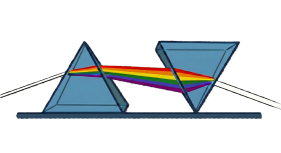
This section introduces a framework for harnessing the power of Systems Thinking embracing multiple perspectives by incorporating essential principles from multiple approaches. It starts with a re-statement and summary of previous exploratory analysis
Can I summarise the conversation for a given situation you have identified 5 phases 'Stance' 'Framing' 'Diagnosis' 'Power' 'Learning' 2 polarities the 'order pole' and the 'complexity pole' and 6 aspects 'observer' 'structure' 'causality' 'variety' 'slant' and 'uncertainty'. Can you produce a definition and glossary of all of these elements of Systems Thinking
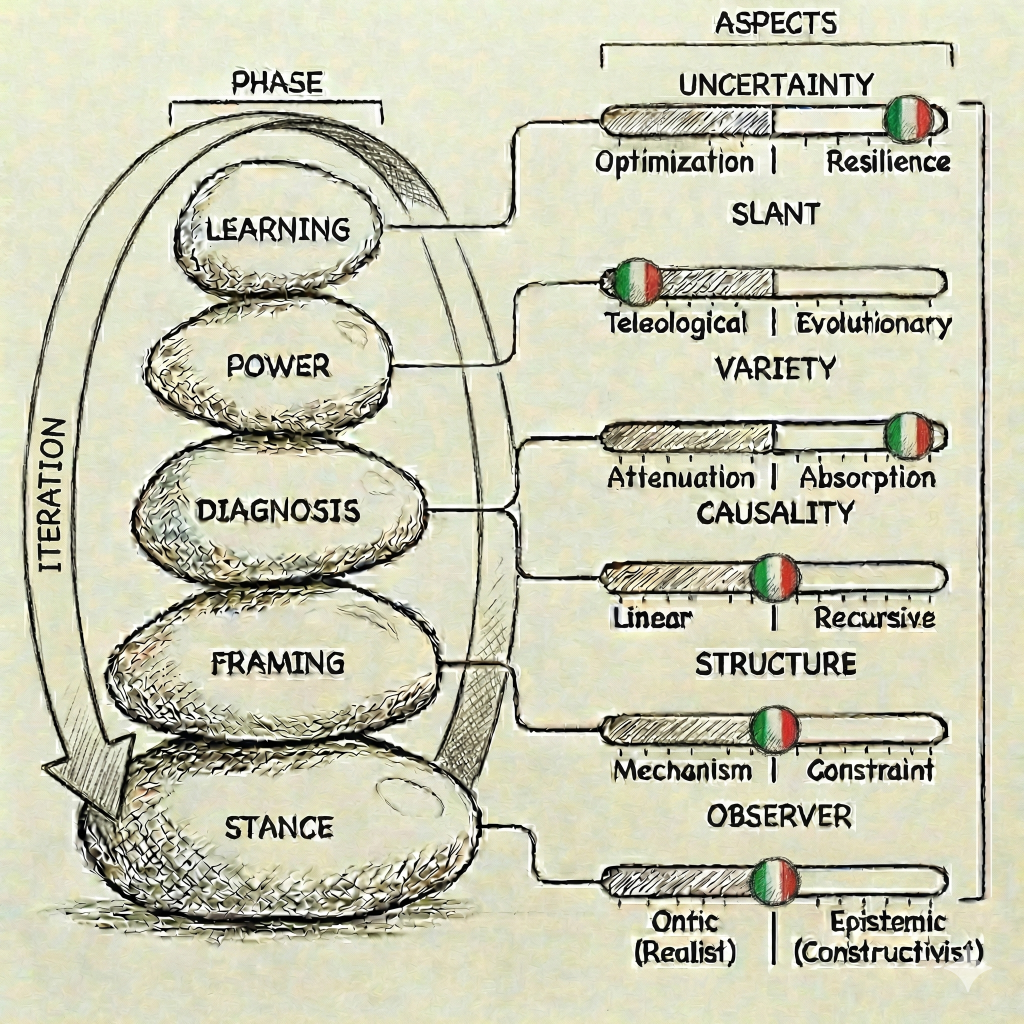
The choice of balanced stones was to reflect the balancing nature in traversing the phases, whist the sequence is accurate it is never a ‘fire & forget’ operation with earlier decisions always being re-assessed in the light of subsequent findings. It is a contingent situation that extends all the way to learning which can reset the basic stance of the understanding.
The earlier analysis settled on the themes of a lifecycle (phases) of the process of Systems Thinking, the options (polarities) for progress and the trade-offs (aspects) needed to navigate the variety of contexts encountered in practice.
Here the three elements - phase, aspects, polarities - are defined, integrated as a guide and illuminated by the [Italian Flag. The relationship between the elements is illustrated in an interplay diagram or as a clearer image.
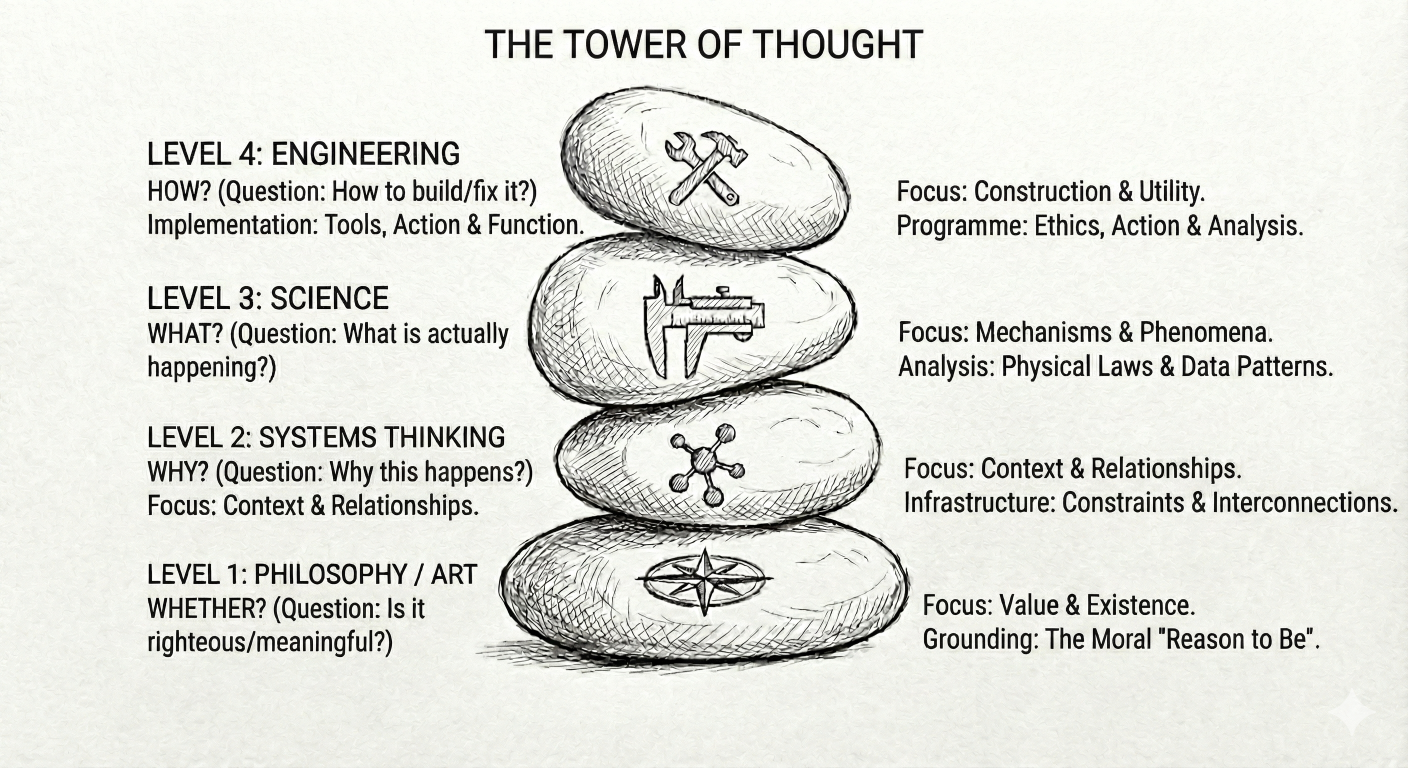
Along the way a ‘Tower of Thought’ was identified which reflects the questioning, the style and the focus of the analyst in exploring situations. This is a contingent positioning where experienced Systems Thinker shift seamlessly between the perspectives.
By way of illustration a specific methodology SAST from Ian Mitroff is compared with the framework for aspects of power or framing.